


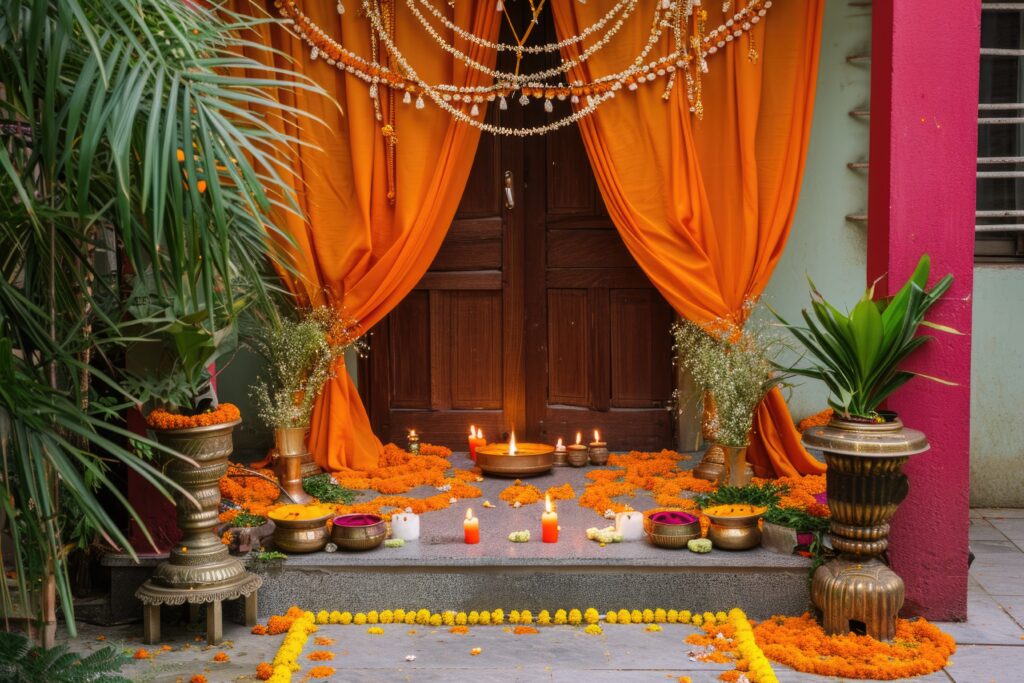
A pooja room in every home holds great significance as it is a sacred space where you go to pray, meditate and connect with the divine. According to Vastu, the placement and design of your mandir strongly impacts the flow of energy in your home. So when the pooja room in your house is aligned with Vastu principles, it emanates a sense of spiritual harmony within the house. In this blog, we cover some of the most practical and beginner-friendly Vastu for pooja room tips.
Vastu for Pooja Room
- Best Direction for Pooja Room
As per Vastu, the northeast direction also called the Ishan Kona is considered the most auspicious direction for a pooja room. Yes, having your pooja room in this direction attracts divine vibrations and helps in enhancing concentration during prayer. If the northeast direction is not available for some reason, then the next best directions are East and North. These two directions invite natural light and positive energies, making them suitable alternatives.
Vastu experts suggest avoiding placing the pooja room in the South, Southwest direction. Apart from this, one should also not have their pooja room below a staircase, or right next to bathrooms. These placements can interfere with the spiritual energy of the space.
- Correct Idol Placement and Orientation
The direction in which idols or pictures of the Gods face, plays a big role in Vastu for pooja rooms. Idols should face east or west. You should face east while praying, as it is considered the direction of enlightenment. Never place idols facing south. Avoid placing deities directly on the floor. Use a clean, elevated platform or wooden base. Also follow these simple guidelines:
- Maintain a minimum distance of 1–2 inches between the wall and the idol so air can circulate.
- Never overcrowd the mandir with too many idols.
- Avoid keeping broken, chipped or damaged idols in your pooja room.
- Vastu for Pooja Room – Layout and Design
The shape of the pooja room also matters a lot as per Vastu. A pooja room should be either square or rectangular. These shapes represent balance and stability. Avoid irregular shapes or triangular spaces. If possible, keep a slightly higher ceiling. If your pooja room has a door, let it open inward.
Avoid placing the pooja room setup directly opposite the main door of the house. And as far as storage is concerned, store pooja essentials like incense sticks, diya oil, holy books, bells, etc., in the south or west direction of the pooja room. These areas are good for storage and will not block the flow of light from the north and east.
- Best Colours for a Vastu-Friendly Pooja Room
Colours influence energy, mood and concentration. For your pooja room, choose soft, soothing colours such as:
- White
- Cream
- Yellow
- Light pastel shades
- Here are simple solutions for vastu for pooja room if you have a small apartment.
- Use a small wooden mandir in the northeast corner of the living room.
- A wall-mounted temple in the north or east also works well.
- Place a clean cloth below the mandir to elevate it from the floor.
- Keep the background simple and avoid placing the pooja room directly opposite the main door or TV.
- Create a separate drawer for storing pooja items, even if the space is small.
- If your home layout does not support ideal Vastu placement, you can use a few remedies:
- Place a copper or brass pyramid in the northeast corner of your home.
- Use a Vastu yantra near the mandir to balance energy.
- Keep the area extra clean and well-lit, as light itself is a purifier.
- Play soft chants or bells during prayer to enhance vibrations.
- These remedies bring balance even if the pooja room location is not perfect.